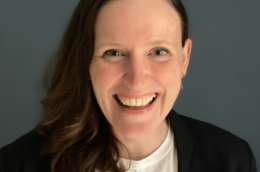
Niamh Devane
Post Doctoral Research Fellow - City St George's UoL
Is an app as accurate and efficient as human analysts? An application of AI in aphasia discourse assessment.
People with aphasia want rehabilitation to improve their everyday talking, the small stories we tell in conversations. However, stories are often not the focus of therapy because of the time it takes to transcribe, and the specialist discourse knowledge needed to analyse them.
A research team in the school of health and medical sciences explored the use of AI to support discourse assessment. An app was built in an iterative process with therapists and developers. Initial testing done on 26 personal stories from people living with aphasia to compare the app’s analysis with a gold standard human analysis.
Come to this talk to hear the initial efficiency and accuracy findings. What do you think? Can AI do the job of a speech and language therapist?
About the speaker:
Niamh is a speech and language therapist and research fellow working on technological innovations for aphasia assessment and treatment. Niamh worked in the NHS in stroke rehabilitation and moved into research in 2012. Since then she has managed aphasia and technology research projects (a virtual reality project in aphasia, The EVA Project, 2012-2015; The EVA case series, 2016-2017; The EVA Park aphasia groups project, 2017-2019; The EVA Park early adopters case study, 2018-2019; An EVA therapy study (VESFA), 2019-2022; A psychometric study of telehealth delivery, FATE-A 2023-2025), as well as time on other projects e.g. 9 months to progress publications and grant applications with a narrative discourse study team, 2023. Niamh graduated from her doctoral studentship (the VESFA study) in 2023. Niamh is currently working on the Dara project. This and the EVA Park work sit within a strong collaborative team with Human-Computer Interaction Design and speech and language therapy in City St George’s, University of London. This body of research drives City University’s reputation as a forerunner in the emerging field of technological approaches to healthcare and rehabilitation. This research has received external recognition through the Tech4Good people’s award (2015) and listing on the Nominet NT100 list of most innovative tech projects for social good.
The MARS team is led by Professor Lucy Dipper with co-investigators Professor Madeline Cruice and Dr Niamh Devane. Jean Rutter, Sarah Johnston, Ruth O’Hagan and Clare Rossiter are research speech therapists. The MARS project won the ‘AI for Good’ award in the 2026 Tech4 Good awards.